
The Securities and Exchange Board of India (Sebi) on Tuesday imposed a penalty of Rs 26 crore on Coffee Day Enterprises (CDEL) for alleged violation of securities laws. The regulator also directed the company to initiate steps to recover dues of Rs 3,535 crore-the amount diverted from seven subsidiaries of CDEL to Mysore Amalgamated Coffee Estates (MACEL). Affirming the violations of the Sebi (Prevention of Fraudulent and Unfair Trade Practices) Regulations and Sebi (Listing Obligations and Disclosure Requirements) Regulations, whole-time member Ashwani Bhatia said the listed company was being run like a personal fiefdom with no checks and balances in place.

The National Company Law Tribunal (NCLT) has reserved its order on the merger of Zee Entertainment Enterprises and with Culver Max Entertainment (earlier known as Sony Pictures Networks India). The Mumbai bench of NCLT, comprising H V Subba Rao and Madhu Sinha, reserved the order on Monday, after hearing arguments from creditors who objected to the scheme including Axis Finance, JC Flower Asset Reconstruction Co, IDBI Bank, Imax Corp and IDBI Trusteeship. In December 2021, Zee Entertainment and Sony Pictures had agreed to merge their businesses.
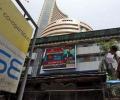
The stock exchange BSE has called off the merger of its unit at the Gujarat International Finance Tec-City International Financial Services Centre (GIFT IFSC), India International Exchange (India INX), with NSE International Exchange (NSE IX), a similar unit floated by rival National Stock Exchange (NSE), according to sources familiar with the development. BSE and NSE had been in discussions for the merger for over a year, but it has yielded no results, they said.

A list of 25 companies that are suspected to be operating bogus demat accounts has been handed over to market regulator SEBI by Investor Grievance Forum demanding a probe into their operations.
The government on Thursday issued an ordinance for setting up a full-fledged Pension Fund Regulatory and Development Authority akin to Insurance Regulatory and Development Authority and Securities Exchange Board of India.
Sebi reforms to foreign investment were overdue, these changes are likely to have positive effects in the long run.

Ten months after new Sebi norms set in, some senior directors still hold more board seats than allowed.

Fundraising via the initial public offering (IPO) route by companies may touch Rs 1 trillion in financial year 2024-25 (FY25), according to a recent note by Pantomath Group - a mid-market investment bank. During the financial year 2023-24 (FY24), 76 companies tapped the markets through mainboard IPOs, Pantomath said, raising nearly Rs 62,862 crore. This is a 21 per cent rise compared to FY23, the note added.

Fundraising momentum is expected to accelerate further in the New Year, potentially surpassing 2024's record figures

The mystery surrounding the alleged fund diversion from Zee Entertainment Enterprises (Zee) by founders Subhash Chandra and Punit Goenka has thickened with speculations of an amount multiple times higher than that cited by the ex-parte interim order passed by the Securities and Exchange Board of India (Sebi) dated June 12, 2023. While Zee shares witnessed a fresh selloff on Wednesday, news reports of accounting fraud left investors guessing about the hole in the media broadcaster's books. An order by the Securities Appellate Tribunal (SAT) in October 2023 had clearly hinted that Sebi's investigation had found a deeper rout.
The fate of the $10 billion merger between Zee Entertainment Enterprises and Culver Max Entertainment, formerly Sony Pictures Networks India, is hanging by a thread, with the two parties unable to finalise an agreement as the end of the one-month grace period looms. The two parties are yet to come to an agreement over Zee Entertainment Enterprises Ltd (ZEEL) MD and CEO Punit Goenka leading the merged entity after Sony expressed concerns after market regulator Sebi barred him from holding managerial posts in Zee and any of the entities in a fund-diversion case.

The government is contemplating changes to the Insolvency and Bankruptcy Code (IBC) to deal with environmental claims and liabilities of defaulting companies to make the law future-ready and meet climate action goals, sources told Business Standard. Currently, the IBC has various categories of claims and creditors, including those related to environmental liabilities.

Cases of front-running mostly happen when large asset managers and intermediaries are involved in bulk trades as their transaction size is generally big enough to impact the stock price.

'The market should maintain optimism on the back of range-bound oil prices, a robust fiscal balance sheet, a better-than-expected monsoon, and moderating inflation.'
As many as 5,532 complaints were received by the regulator in January, an 80 per cent increase over the number of complaints filed in the previous month.

The issue is likely to be discussed on Thursday at a meeting of Sebi's board, which would also be apprised of the impact of the Finance Ministry's decision for not agreeing to such a proposal from the capital markets regulator, sources said.

The CBI has arrested Sanjay Gupta, owner and promoter of Delhi based OPG Securities Pvt. Ltd, in connection with the NSE co-location scam in which brokers allegedly abused the facility to make gains by getting early access to the stock market, officials said on Wednesday. The agency has already arrested Chitra Ramkrishna, former CEO and managing director of NSE and Anand Subramanian, former group operating officer of the market, they said. Gupta was arrested on Tuesday night, four years after the agency had registered the FIR in the Co-location scam case against him and his company.
The initial public offerings (IPOs) by small and medium enterprises (SMEs) hit a new high in 2023-2024 (FY24). In this financial year, data from the Prime Database showed that 190 companies raised Rs 5,579 crore through the SME IPO route. This financial year's tally bettered the fundraising in the previous financial year when 125 companies raised Rs 2,235 crore.

'Are we to believe that coordinated moves by the Canadian and US authorities are no longer taking place?', asks Ambassador M K Bhadrakumar.

Swiggy is planning to file its draft red herring prospectus with the Securities and Exchange Board of India for its initial public offering (IPO) in the next two weeks, aiming for an $11 billion IPO valuation target. The Bengaluru-based firm plans to raise an estimated $1 billion (Rs 8,300 crore) through the IPO this year. The company is targeting a valuation in the range of $10-11 billion, and it currently has approximately $800 million in cash from the previous funding round, according to sources.
You could invest if you have missed the earlier rally, you could churn your portfolio to move towards better quality stocks or funds and you could even clear your loans by some profit booking

Indian Grandmaster D Gukesh scored a crushing victory over Alexander Donchenko in the 10th round of Tata Steel Masters in Wijk Aan Zee, Netherlands on Thursday.
The Enforcement Directorate on Friday conducted multiple raids in connection with its money laundering probe into the alleged irregularities in the National Stock Exchange (NSE) co-location case, officials said. The central probe agency is covering nine premises in Delhi and neighbouring Gurugram including those of some brokers involved in the case, they said. The raids are being carried out under the provisions of the Prevention of Money Laundering Act (PMLA).

Billionaire banker Uday Kotak founded bank as well as brokerage created and oversaw an offshore fund used by an unnamed investor to profit from a plunge in Adani shares that followed a damning Hindenburg report, the US short seller said on Tuesday. Hindenburg Research, which had in a January 2023 report alleged stock market manipulations and accounting fraud at the Adani group, said it has received a show cause notice from the Indian markets regulator Sebi over gains made from betting on the conglomerate's shares.

BSE's fresh shot at cracking the derivatives market is off to a promising start. However, Asia's oldest bourse is facing resistance from brokerages with nearly 10 large brokers yet to offer the relaunched Sensex and Bankex derivatives on their platforms. Many brokers maintain that they are working on the back end to enable BSE derivatives on their apps and websites. Some said while volumes are picking up, they are still miniscule compared to bigger rival NSE, which is the most-preferred venue for derivatives trading. Only a few brokers responded to formal queries sent by Business Standard on the issue of allowing BSE derivatives on their platform.

Market regulator Sebi on Monday moved the Supreme Court seeking 15 more days to conclude the ongoing probe into the allegations of stock price manipulation by the Adani group. The Securities and Exchange Board of India (Sebi), in its fresh application, said that it has examined and investigated 24 matters pertaining to the case. "Out of the said 24 investigations/examinations, 17 are final and complete and approved by the Competent Authority in accordance with Sebi's extant practice and procedures," the regulator said.

It could be a matter of concern that foreign shareholders of the NSE are registered in tax havens such as Mauritius and Cyprus.

A plea has been filed in the Supreme Court seeking investigation under the supervision of a sitting apex court judge against the Adani group of companies in light of the allegations made by the US-based Hindenburg Research.

The 'Rating Level 4' means that the financial market regulators have all regulatory measures "fully in force"
While a lot of risk-factor writing has become a template activity, one is often tempted to reconsider if the depiction of Indian circumstances ought to change. After all, India has never seen such near-pristine times in its world standing. However, a reality check would be in order. And our polity never fails to provide such reality checks.

People in full-time jobs should especially avoid intraday trading as it results in loss of focus and affects performance.
The change will help companies address market rumours without being worried about the impact on deal pricing.

In other IPOs, the minimum dilution to the public will be 25 per cent, or Rs 400 crore, whichever is lower.

As air travel gathered steam in financial year 2021-22 (FY22) after being restricted the previous year, fewer passengers were affected by flight cancellations. Directorate General of Civil Aviation (DGCA) figures show that there were 40 per cent fewer flyers in FY22 than in FY20, but 60 per cent fewer passengers were impacted by cancellations, and 80 per cent fewer passengers were denied boarding. FY20 was the last financial year when India's booming aviation industry carried out full-scale operations before being completely grounded for a couple of months due to the Covid-19 pandemic.

Bharti Global, the international investment arm of Bharti Enterprises, has decided to buy 24.5 per cent equity in BT Group - a move that will make the Indian conglomerate the biggest shareholder in the UK's second-largest telecom company both in terms of market value and subscriber count. The shares are being purchased from billionaire Patrick Drahi's Altice UK through a combination of cash and debt .

Micro-cap stocks are in the line of fire as market regulator Securities and Exchange Board of India (Sebi) is tightening its noose around investment in small-cap stocks. Given this, analysts suggest investors exit the segment, at least, for the time being. Independent market analyst, Ambareesh Baliga, for instance, said that regulators have gotten worried on the valuation front, though belated, which could prove to be the last straw on the camel's back.

'India's emergence as a top crypto market comes despite a regulatory and tax environment that can be challenging for the industry to navigate.'

'Investors should do proper analysis before putting in their money in NFOs as most new launches are in the high-risk thematic space.'
